
Introduction
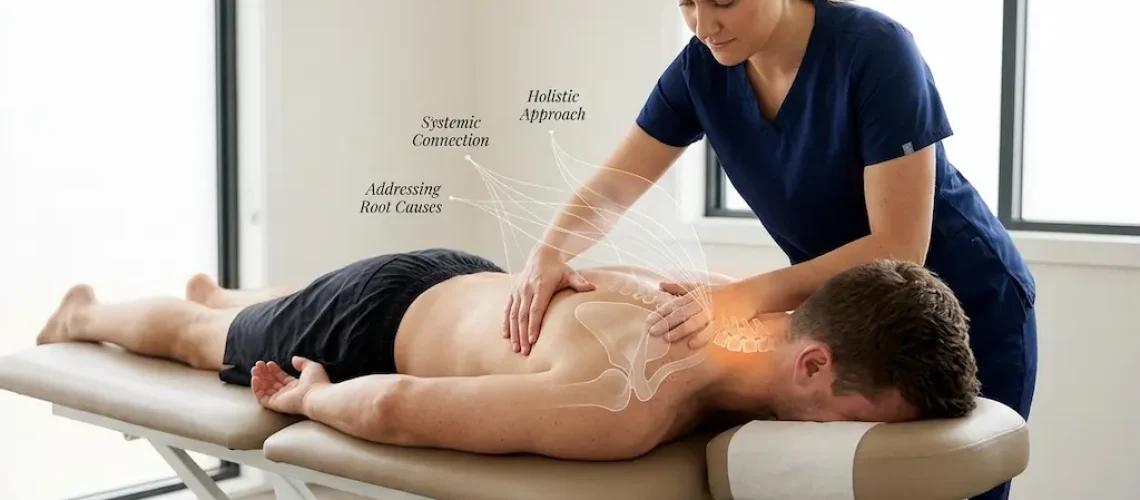
Many people experience neck pain that improves with treatment or rest, only to return weeks or months later. This recurring pattern can be frustrating and confusing. From an osteopathic perspective, ongoing neck pain is rarely caused by a single structure or event. Instead, it often reflects how the neck is being used, supported, and compensated for by the rest of the body.
Neck Pain Is Often a Symptom, Not the Root Cause
While pain is felt in the neck, the underlying contributors may lie elsewhere. The neck sits between the head and the rest of the body and must constantly adapt to posture, movement, and load. If other areas are not functioning well, the neck often takes on extra strain.
Common contributing factors include:
- Poor posture, especially prolonged sitting or device use
- Restricted movement in the upper back or shoulders
- Jaw tension or teeth clenching
- Reduced core or postural support
- Stress and increased muscle tone
Treating only the painful area may provide short-term relief, but the problem can return if these contributors remain.
The Role of Posture and Daily Habits
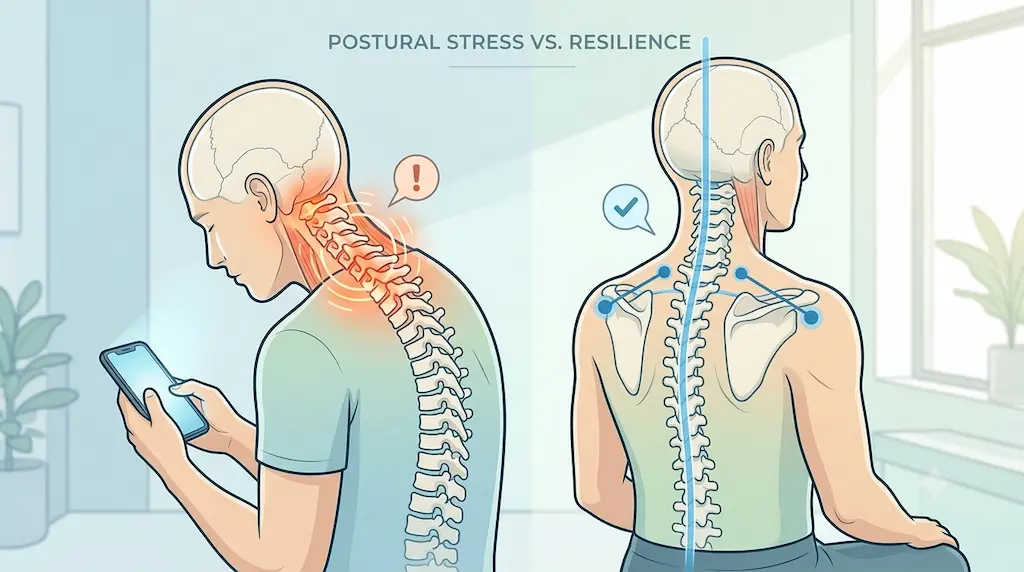
Modern lifestyles place sustained demands on the neck. Forward head posture, prolonged screen time, and limited movement variety can overload the cervical spine and surrounding muscles.
Over time, tissues adapt by becoming:
- Stiffer and less mobile
- More sensitive to load
- Less efficient at absorbing stress
These changes make the neck more vulnerable to flare-ups, even with minor activities.
Movement Restrictions Elsewhere in the Body
From an osteopathic viewpoint, the body functions as a connected system. If the thoracic spine, shoulders, or rib cage are stiff, the neck must move more to compensate. Repeated compensation can lead to fatigue, irritation, and pain.
This is why neck pain often returns if only the neck itself is treated, without addressing the wider movement patterns.
Stress and the Nervous System
Stress can significantly influence neck pain. Emotional or mental stress increases muscle tone, particularly in the neck and shoulders. This heightened tension reduces circulation and movement, making pain more likely to persist or recur.
Osteopaths consider both physical and nervous system factors when assessing recurring neck pain.
Why Pain Returns After “Sleeping Wrong” or Minor Strain
Many people notice neck pain after an awkward sleep position or minor movement. Often, this is not the true cause, but rather the final trigger acting on tissues that were already under strain.
When resilience is reduced, small stresses can provoke pain more easily.
An Osteopathic Approach to Recurring Neck Pain
Osteopathy focuses on identifying and addressing the underlying patterns contributing to neck pain. This may include:
- Improving mobility in the upper back, ribs, and shoulders
- Reducing muscle tension and joint restriction
- Addressing postural habits and workspace setup
- Supporting breathing and relaxation patterns
- Encouraging movement variety and self-management strategies
The goal is not just pain relief, but improved function and long-term resilience.
When to Seek Further Help
If neck pain is recurring, worsening, or accompanied by symptoms such as arm pain, numbness, or headaches, a professional assessment is recommended. Early intervention can often prevent acute pain from becoming a chronic pain or pattern of reoccurrence.
Conclusion
Recurring neck pain is rarely random or unavoidable. From an osteopathic perspective, it reflects how the neck is adapting to ongoing physical and lifestyle demands. By addressing the whole body, not just the site of pain, osteopathic care aims to reduce recurrence and help people move more comfortably and confidently.