
Introduction
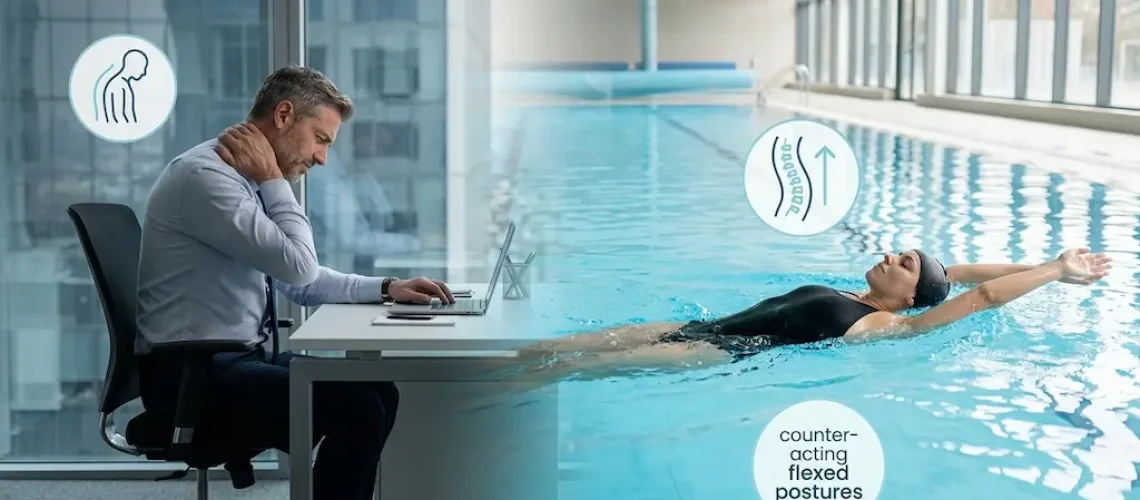
Postural stiffness is an increasingly common complaint in modern life, particularly among individuals who spend prolonged periods sitting, working at desks, or using digital devices. Osteopaths frequently see patients with stiffness in the neck, thoracic spine, shoulders, and hips related to sustained postural strain. Swimming, when appropriately selected and performed, can be a highly effective activity for improving mobility, reducing stiffness, and supporting postural health from an osteopathic perspective.
Understanding Postural Stiffness
Postural stiffness develops when muscles, joints, and connective tissues adapt to prolonged or repetitive positions. Common contributing factors include:
- Prolonged sitting or sedentary behaviour
- Forward head posture and rounded shoulders
- Reduced thoracic spine mobility (middle back)
- Shallow breathing patterns
- Decreased general movement variability
Over time, these adaptations can reduce joint range of motion, impair circulation (blood flow), and alter neuromuscular control.
Why Swimming Is Unique
Swimming offers a movement environment unlike land-based exercise:
- Buoyancy reduces gravitational load on joints
- Warm water promotes muscle relaxation and circulation
- Rhythmic, cyclical movement encourages gentle spinal mobility
- Low-impact resistance improves strength without compression
These characteristics make swimming particularly suitable for individuals experiencing stiffness or discomfort related to posture. It also has a range of mental health benefits that can alleviate stress, which may be contributing to the stiffness.
Osteopathic Benefits of Swimming for Postural Stiffness
1. Improved Spinal Mobility
Swimming involves coordinated movement of the cervical, thoracic, and lumbar spine. Strokes such as backstroke and freestyle encourage spinal rotation and extension, helping counteract the flexed postures commonly adopted during desk work.
2. Reduced Muscle Tone and Tension
Water immersion promotes relaxation of overactive postural muscles, particularly in the upper trapezius (shoulders), spinal muscles, and hip flexors. Improved circulation supports better blood flow to tissue and promotes recovery.
3. Enhanced Breathing Mechanics
Swimming requires controlled, diaphragmatic breathing. From an osteopathic perspective, improved rib cage mobility and breath function positively influence spinal mechanics and nervous system balance.
4. Balanced Muscle Activation
Swimming promotes symmetrical use of the body, encouraging balanced activation of the shoulder, torso, and hip musculature. This can help reduce habitual asymmetries associated with postural strain.
5. Nervous System Regulation
The repetitive, flowing nature of swimming has a calming effect on the nervous system. Reduced sympathetic tone can contribute to decreased muscle guarding and perceived stiffness.
Stroke Selection Matters
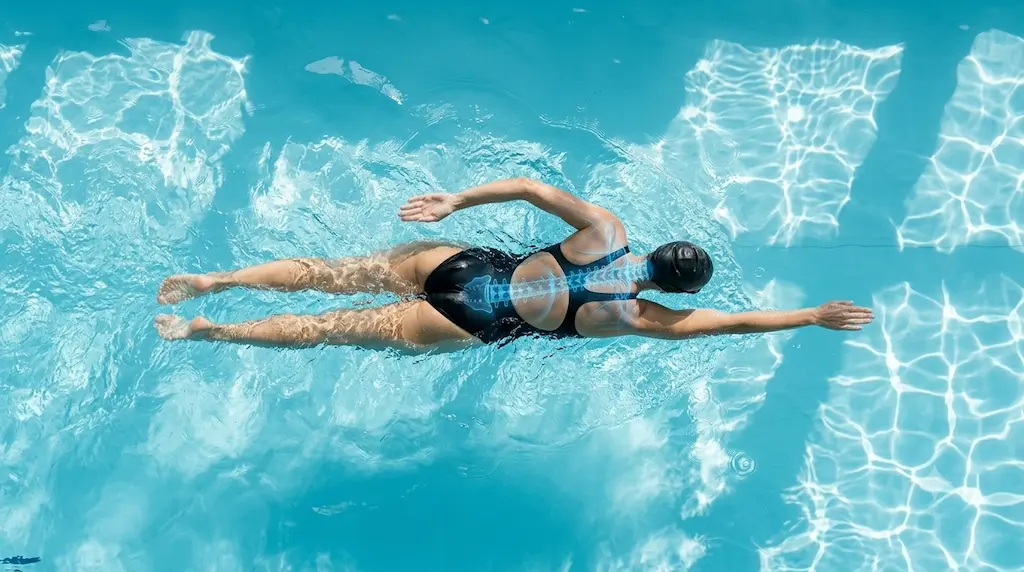
Not all swimming styles affect posture equally:
- Backstroke: Particularly beneficial for thoracic extension and shoulder mobility
- Freestyle: Encourages rotation and coordinated breathing
- Breaststroke: May aggravate neck or lumbar stiffness if technique is poor
Our osteopaths may advise modifying stroke choice or technique to suit individual needs.
Integrating Swimming Into Osteopathic Care
Swimming can complement osteopathic treatment by maintaining gains in mobility achieved through manual therapy. It is often recommended as part of a broader movement strategy that may include stretching, strength work, and postural awareness.
Patients are typically advised to start gradually, focus on relaxed technique, and avoid excessive training volume during early stages.
Who Can Benefit Most?
Swimming is particularly beneficial for:
- Office workers with neck and upper back stiffness
- Individuals recovering from postural overload
- Those with joint sensitivity who struggle with high-impact exercise
- Patients seeking a sustainable, whole-body movement practice
Conclusion
From an osteopathic perspective, swimming offers a gentle yet effective way to address postural stiffness by improving mobility, reducing muscle tension, and supporting balanced movement patterns. When tailored to the individual and combined with appropriate osteopathic care, swimming can play a valuable role in restoring comfort, flexibility, and postural resilience.