
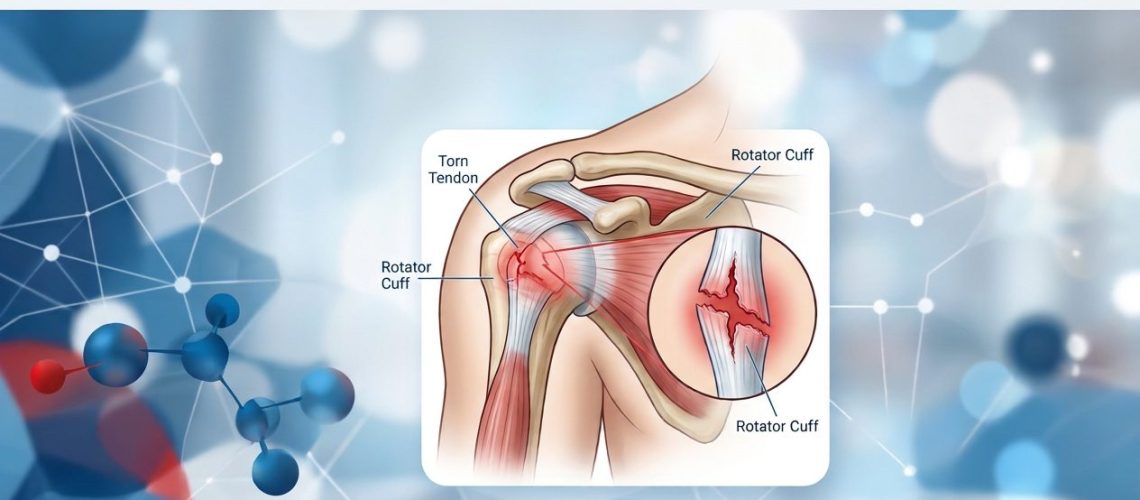
If you have had a shoulder ultrasound or MRI, your report may use terms such as partial-thickness tear, full-thickness tear, partial tendon tear, or full tendon tear.
Although these terms can sound concerning, they mainly describe the depth and width of a change in the tendon. They do not, by themselves, tell us how painful your shoulder will be or what treatment you will need.
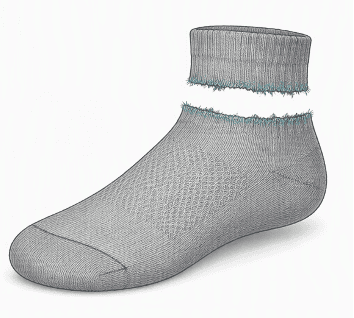
A simple way to picture this is to think about a sock with a worn area or hole.
There are two questions we need to answer:
- How deep is the hole?
- How big is the hole?
What is a Partial-Thickness Tear?
A partial-thickness tear means that some tendon fibres have changed, while the tear does not extend all the way through the tendon.
The tendon remains connected, and much of it may still be working well.
Some people notice pain with lifting, reaching overhead, or lying on that shoulder, while others have only mild symptoms.
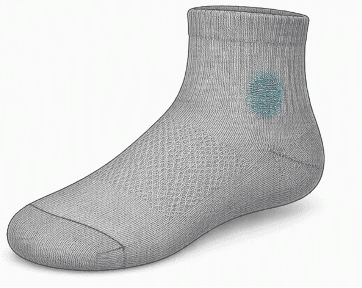
Sock analogy: Think of a sock with a worn, thin patch that has not opened all the way through.
What is a Full-Thickness Tear?
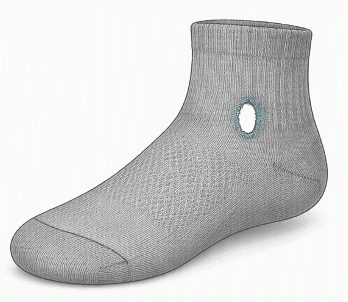
A full-thickness tear means that a small opening extends all the way through the depth of the tendon.
This term describes depth, not necessarily size. The opening may still be small, and it does not automatically mean the whole tendon is torn.
Symptoms vary: some people have little pain, while others notice weakness or difficulty with certain movements.
Sock analogy: Think of a small hole that passes from the outside of the sock to the inside, while remaining narrow.
What is a Partial Tendon Tear?
This term describes how much of the tendon’s width is involved.
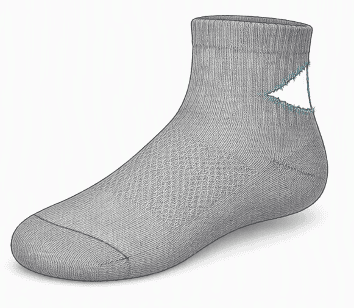
Similarly, only a small part of a shoulder tendon may be affected, while the rest remains attached and continues to work.
Sock analogy: Think of a hole affecting only one corner of the sock, while most of its width remains intact.
What is a Full Tendon Tear?
A full tendon tear means that the change extends across the tendon’s entire width.
In the shoulder, this means the tendon is no longer attached to the bone across its full width.
These tears are usually larger and may cause more noticeable weakness or reduced function, although the effect differs from person to person.
Sock analogy: Think of a tear extending completely from one side of the sock to the other.
Why Does This Matter?
The most important point is that tendon tears are not all the same.
The wording on a scan is only one part of the picture.
A small full-thickness tear may cause few problems, while a larger partial-thickness tear may be more uncomfortable.
The size of a tear on a scan does not always match a person’s pain or ability. Many people with tendon tears remain active and continue doing the things that matter to them.
Treatment decisions are based on more than the scan. Your pain, strength, movement, daily activities, goals, and lifestyle help guide the most appropriate approach.
A scan provides useful information, but it does not define your shoulder or determine your outcome.