
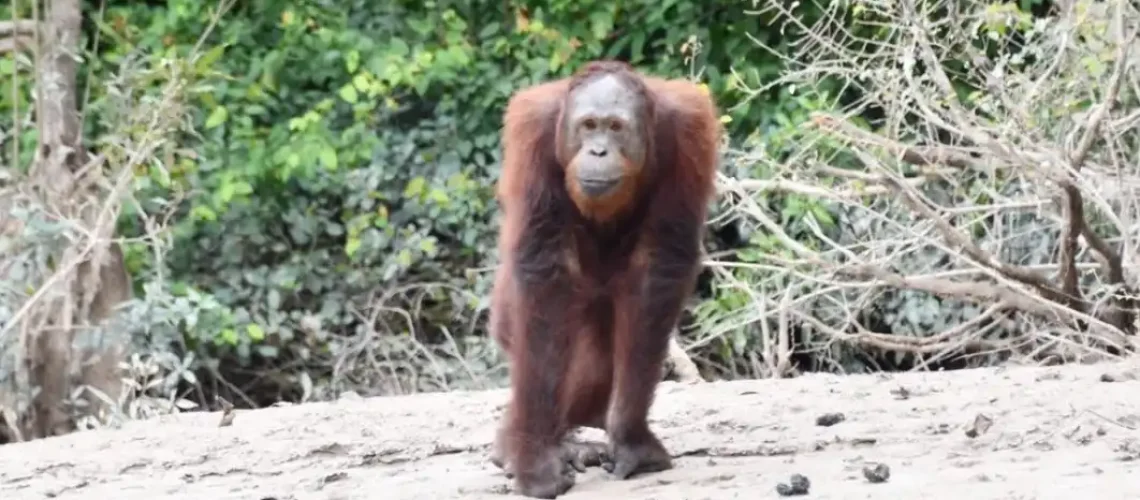

In recent weeks, pre-release orangutans on Kaja Island and Bangamat Island have been seen less frequently during supplementary feeding times. This trend aligns with the significant ecological changes currently affecting both islands. Nearly three weeks have passed without rainfall, causing river water levels to drop drastically and triggering noticeable shifts in orangutan behaviour.
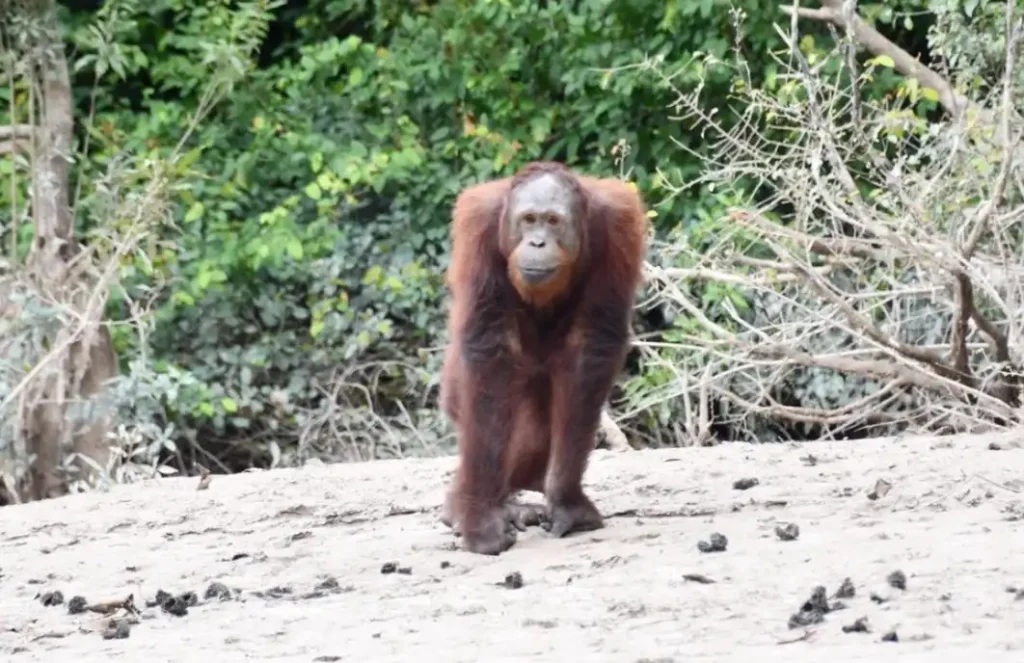
Under normal conditions, low water levels often encourage orangutans to descend to riverbanks in search of relief from the heat or simply to drink. However, field observations reveal a different pattern. Several individuals, including Josie and her offspring, Bumi, Monita, Topan and Mema, have instead withdrawn from open areas such as riverbanks and feeding platforms.
For Josie, keeping her distance from public areas is not merely a response to the dry weather. As a mother, her primary concern is the safety of her young. She chooses to remain within the dense forest of Kaja Island, only occasionally approaching the feeding platform to collect fruit before retreating back into the shelter of the trees. This behaviour reflects a deeply rooted survival strategy.
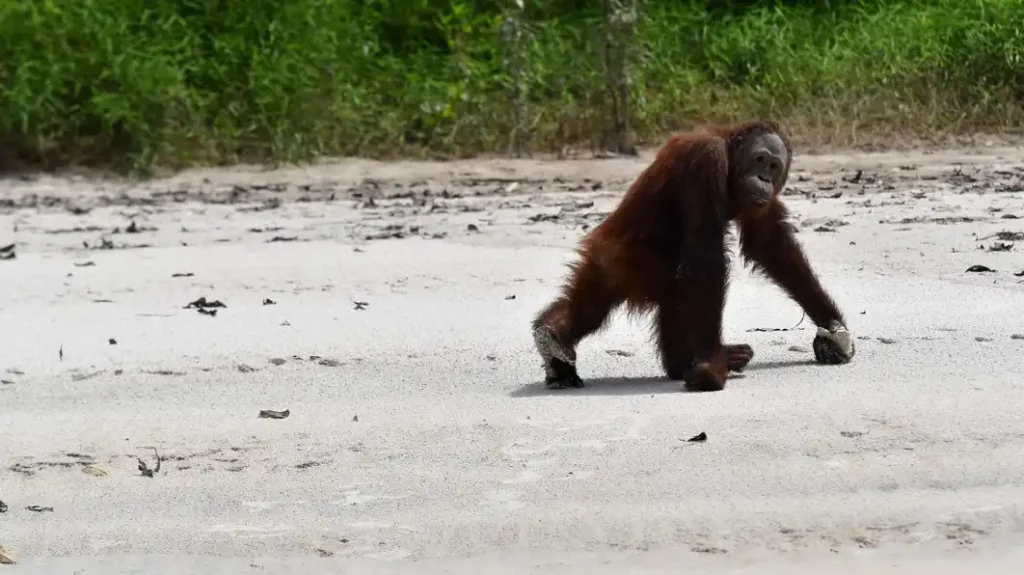
Meanwhile, Bumi, now residing on Bangamat Island, is known as a peaceful individual with no known rivals. He is usually seen relaxing along the river’s edge. Recently, however, his absence from these areas has raised questions. Instead, Bumi appears to prefer staying beneath the dense forest canopy, avoiding open spaces exposed to the intense sun.
This shift suggests that Bumi may have discovered cooler, more secure areas within the interior of the island, places that also offer abundant natural food sources during the dry season. His decision to remain within the forest indicates a growing ability to read environmental conditions and adapt independently.
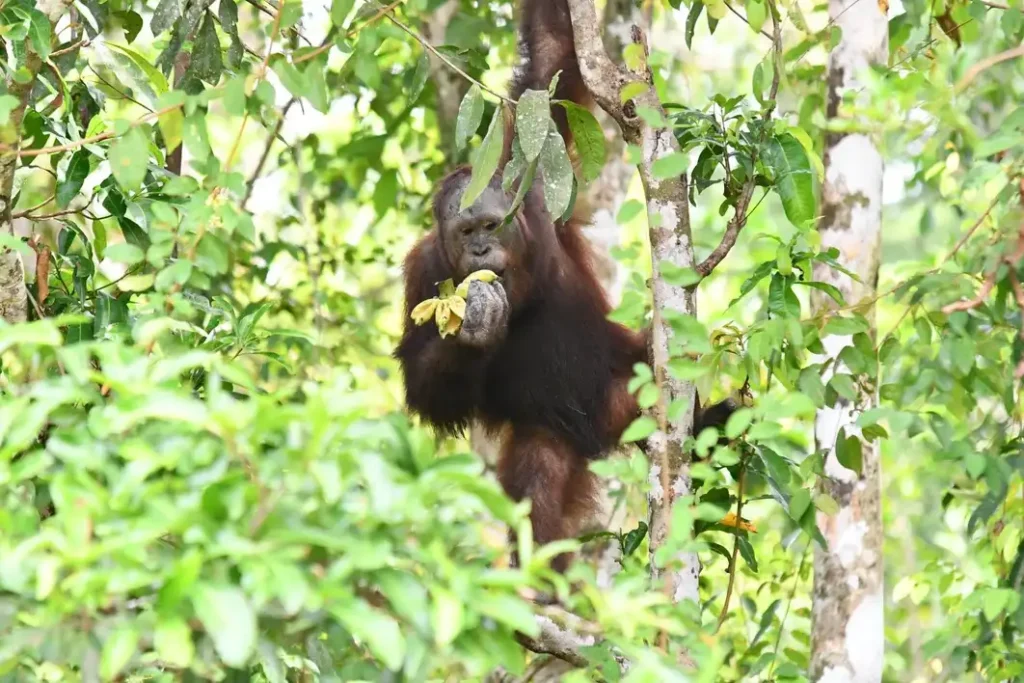
Although this behaviour has made visual monitoring by technicians more challenging, it actually carries positive implications. The fact that Bumi and other orangutans remain deep within the forest demonstrates that natural food sources, such as wild fruits, young leaves, and other forest resources, are still plentiful. They do not feel the need to rely on supplementary feeding or approach humans.
Furthermore, their reluctance to linger in open areas reflects a high level of natural wariness as an essential trait for orangutans being prepared for life in the wild. They are choosing the safety of the forest over the temporary comfort of riverbanks or feeding platforms.
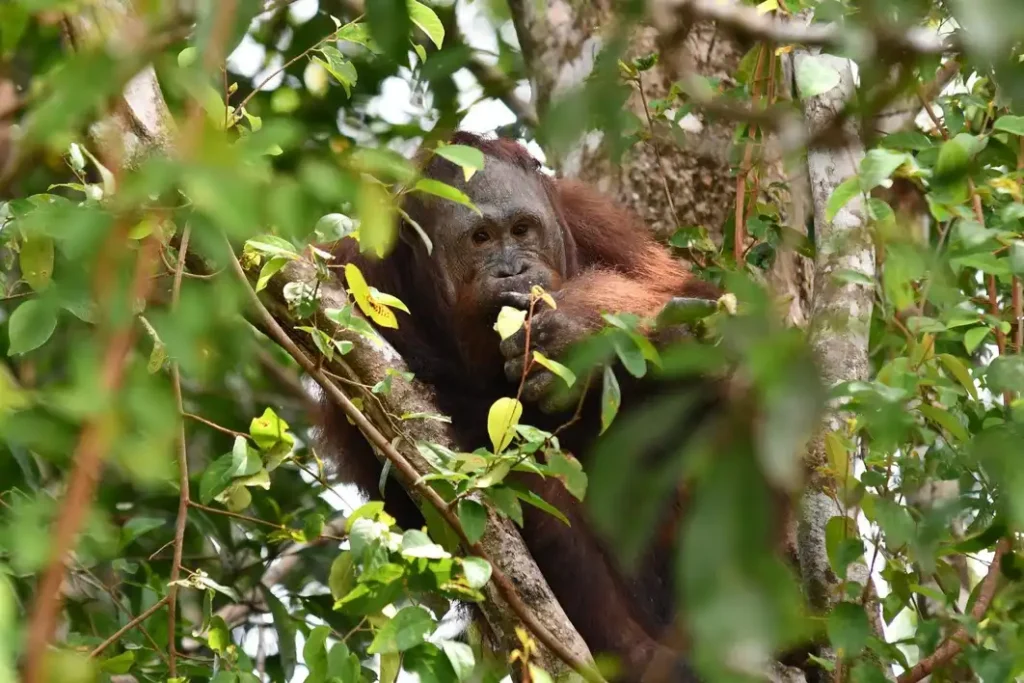
The technicians conclude that although sightings of Bumi and his companions have become less frequent, their health is presumed to remain stable. As long as they are occasionally observed in active condition and displaying natural behaviours, their “disappearance” from regular view is, in fact, a strong indicator of successful wild adaptation as a sign that Bumi is steadily moving closer to a truly independent life in the forest.