
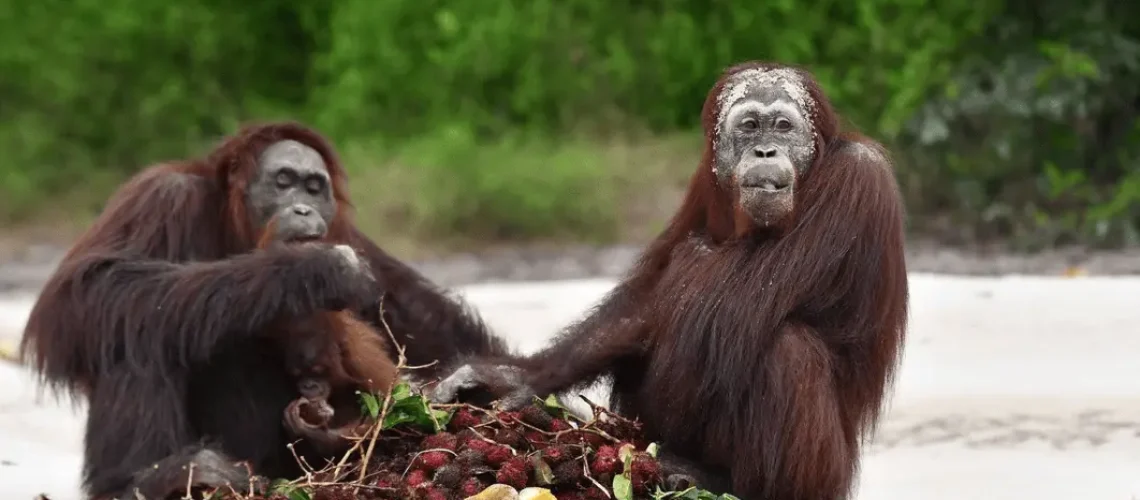

In recent weeks, orangutans living on the pre-release islands of Kaja and Bangamat have been observed less frequently during supplementary feeding times. The ecological conditions on both islands are currently undergoing a significant transitional phase. Nearly three weeks without rainfall have caused river water levels to drop drastically. Under such circumstances, orangutans typically descend to the riverbanks to seek refreshment or simply to drink. However, what has been observed this time tells a different story.
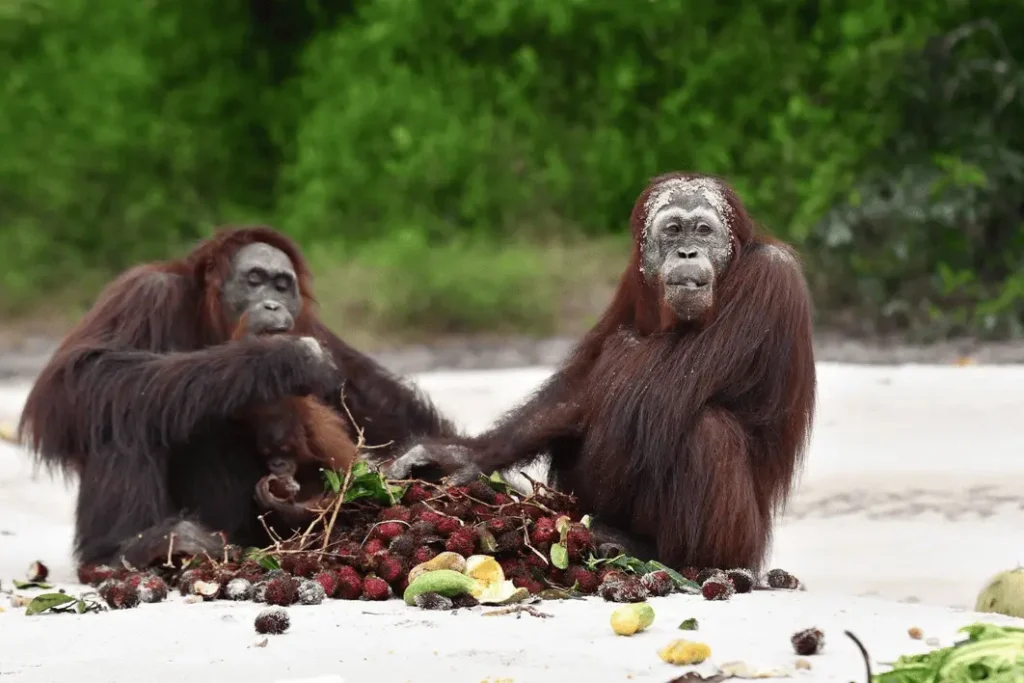
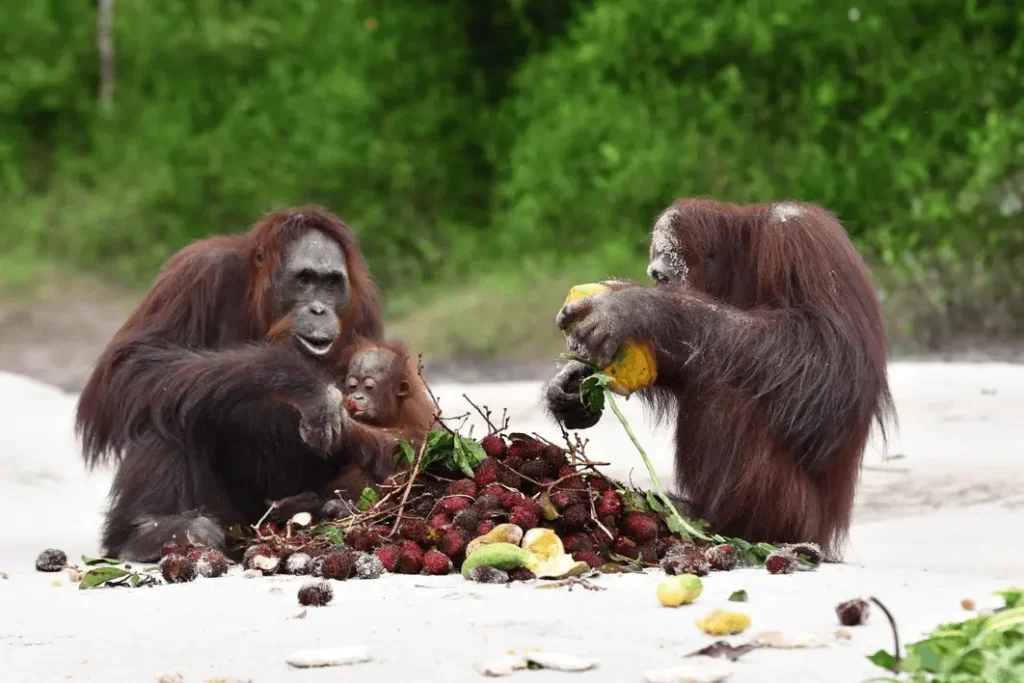
Field observations show that several individuals, such as Josie and her infant, Bumi, Monita, Topan and Mema, have chosen to withdraw from open areas like riverbanks and feeding platforms. For Josie, this decision is not merely a response to dry weather, but a deliberate safety strategy. Her primary concern at this stage is the protection of her infant, making distance from open and exposed areas the safest option.
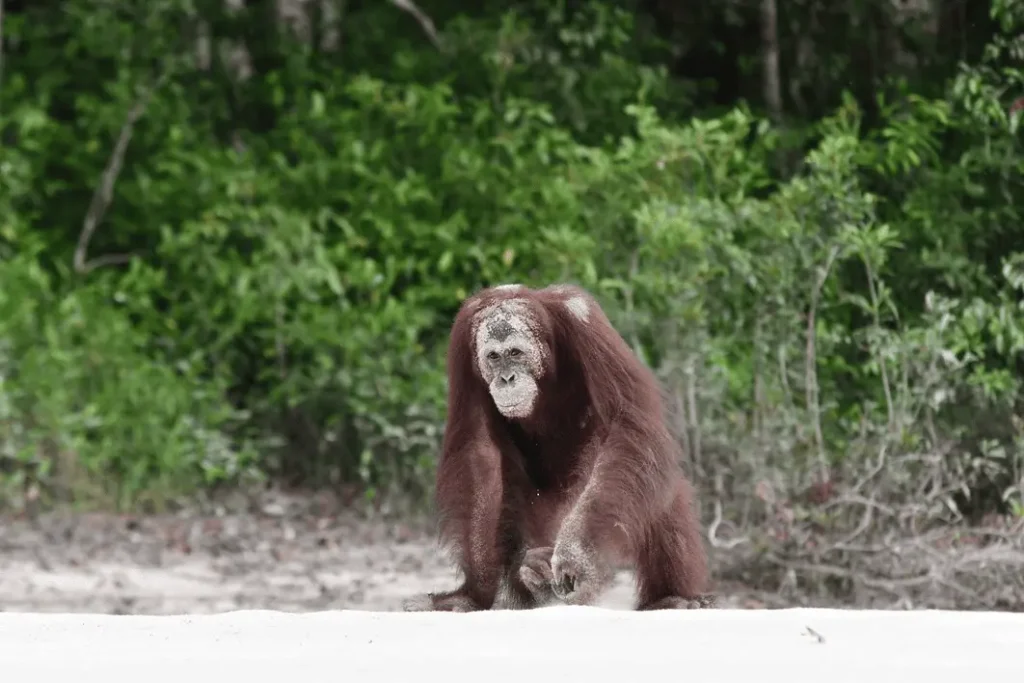
Meki, who is usually almost never absent during supplementary feeding sessions, was also not seen this time. Topan was also sighted for a short moment. During this brief appearance, she displayed a unique behaviour by smearing beach sand on her face. Thus, an action believed to help cool the skin in hot conditions. Similar behaviour has been observed among other island orangutans, including Oka, Moza, and Bayi.
Although these brief appearances made monitoring efforts more challenging for the technical team, the situation actually reflects a positive indicator of rehabilitation success. The fact that orangutans remain deep within the forest during the dry season suggests that natural food sources are still sufficiently available. They do not feel the need to rely on supplementary feeding or to approach humans.
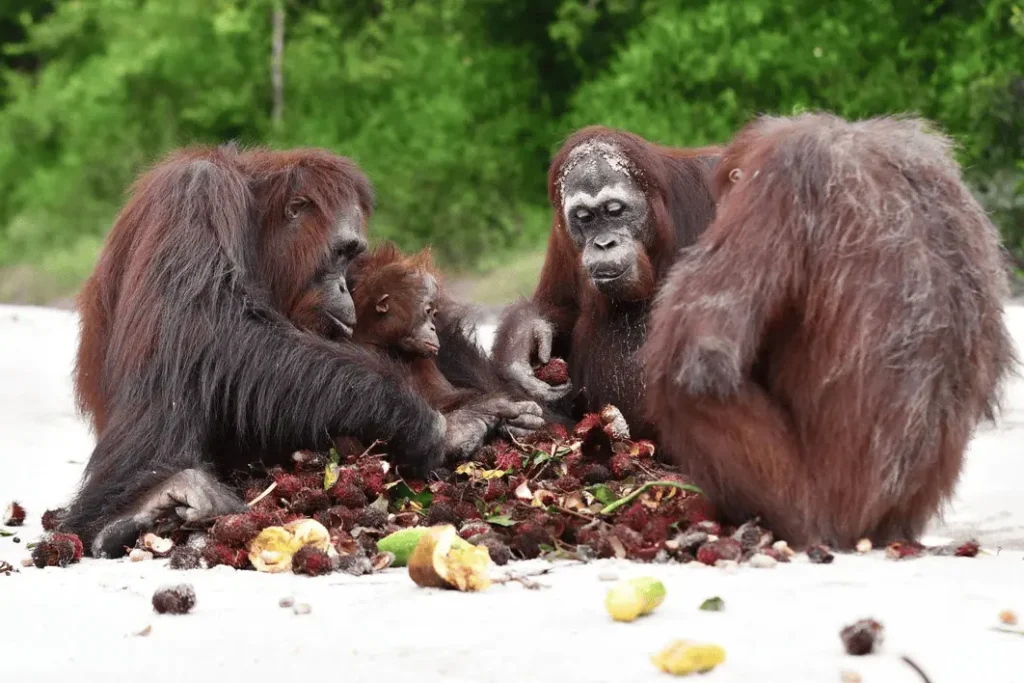
Their reluctance to linger in open areas demonstrates a high level of natural wariness. These orangutans clearly prefer the safety of dense forest cover over the perceived comfort of riverbanks or feeding platforms. They appear capable of adapting to microclimatic changes on the islands, seeking areas of retained moisture within the forest where conditions remain more stable than in sun-exposed open spaces.
The technical team concludes that although visual encounters with Topan, Mema and other individuals have decreased, their health conditions are assumed to remain stable. As long as they are still occasionally observed in an active state, their “disappearance” from human view is, in fact, a strong sign of successful wild adaptation.