
Introduction
Long hours at a desk can place sustained strain on the body. Osteopaths commonly see office workers with stiffness in the neck, shoulders, upper back, hips, and lower back. While hands-on treatment can help, what you do between appointments matters just as much. From an osteopathic perspective, regular, gentle stretching at home can help counteract postural strain and support long-term comfort.
Why Office Work Causes Stiffness
Office work often involves:
- Prolonged sitting
- Limited movement variety
- Forward head and rounded shoulder posture
- Shallow breathing
Over time, muscles and joints adapt to these positions by becoming tighter and less mobile. Stretching helps restore movement, improve circulation and reduce the cumulative load on the body.
Osteopathic Principles Behind Stretching
Osteopathy emphasises balance, adaptability, and whole-body movement. Stretching is most effective when it:
- Is gentle rather than forceful
- Is performed regularly
- Encourages relaxed breathing
- Addresses commonly overworked areas
Stretching should not provoke pain. Mild tension is normal, but discomfort is a sign to ease off.
Key Areas to Focus On
Neck and Upper Shoulders
Prolonged screen use increases load on the neck.
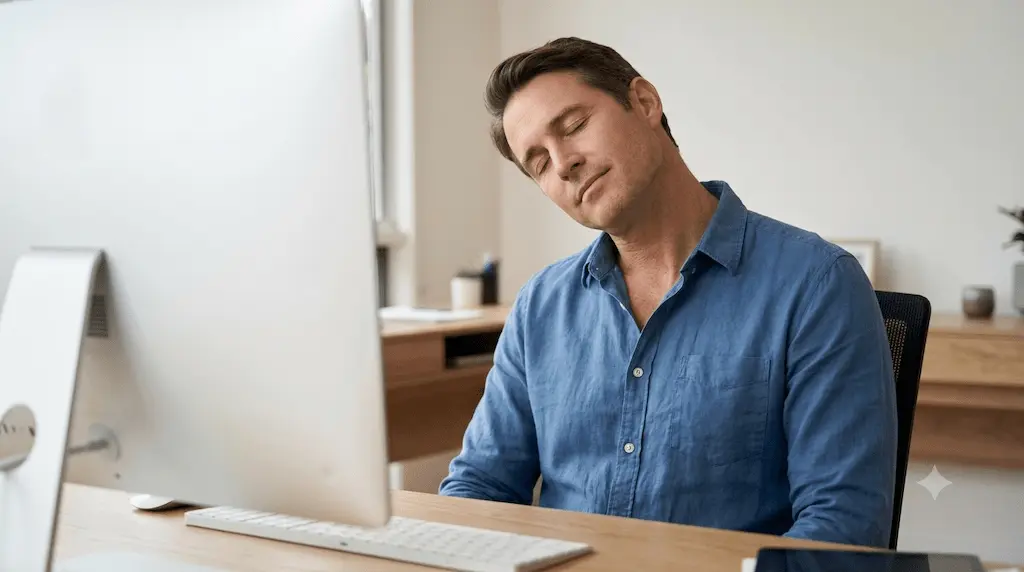
- Gentle side-bending and rotation stretches
- Shoulder rolls and shrugs
- Avoid holding static stretches for too long – active stretches are more effective
Upper Back and Chest
Sitting encourages forward rounding.
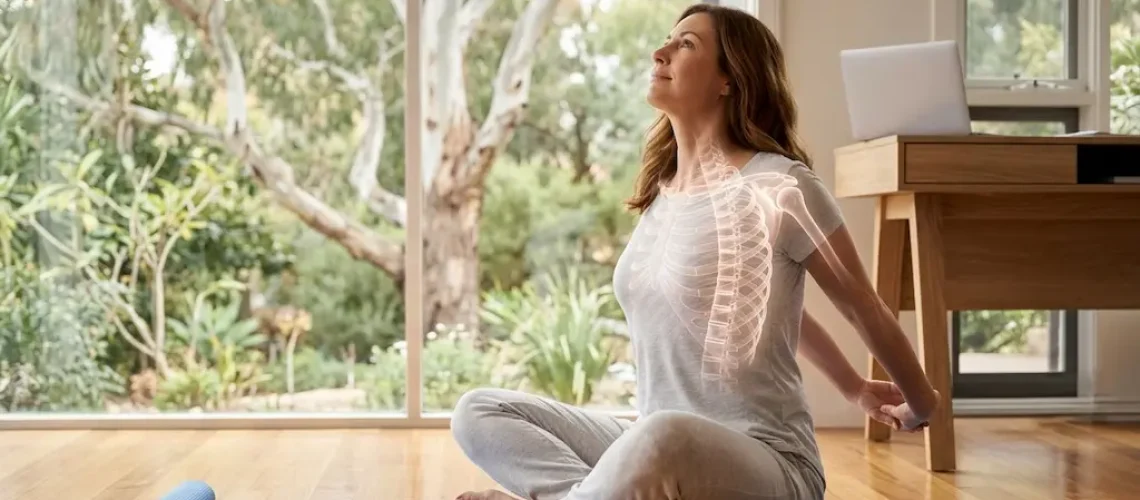
- Chest-opening stretches
- Thoracic extension over a chair or foam roller
- Arm movements combined with deep breathing
Hips and Lower Back
Hip flexors often shorten with sitting.
- Hip flexor/quad and glute stretches
- Gentle spinal rotation lying on your back
- Standing movement breaks throughout the day
Forearms and Wrists
Repetitive keyboard and mouse use can overload the forearms.
- Wrist flexor and extensor stretches
- Gentle hand opening and closing exercises
How Often Should You Stretch?
rom an osteopathic standpoint, little and often is best:
- Short stretches once or twice daily
- Brief movement breaks every 30–60 minutes at work
- Focus on consistency rather than intensity
Even 5–10 minutes can make a noticeable difference when done regularly.
Stretching and Breathing
Breathing plays an important role in reducing muscle tension. Slow, relaxed breathing during stretching helps calm the nervous system and allows muscles to release more effectively. Try inhaling through the nose and exhaling slowly through the mouth while stretching.
Stretching Is Only Part of the Picture
Stretching works best when combined with:
- Improved workstation ergonomics
- Regular movement during the day
- Gradual strengthening of postural muscles
- Professional assessment when pain persists
If stiffness or pain keeps returning, it may indicate deeper movement restrictions or postural habits that require individualised care.
When to Seek Osteopathic Advice
If stretching causes pain, or if symptoms such as headaches, arm pain, or persistent stiffness continue despite regular movement, an osteopathic assessment can help identify contributing factors and tailor advice to your needs.
Conclusion
For office workers, home stretching is a simple yet effective way to support posture, reduce stiffness, and improve comfort. From an osteopathic perspective, the goal is not perfect posture, but a body that can move easily, adapt well, and recover efficiently. Regular, gentle stretching is an important step toward that balance.