
Introduction
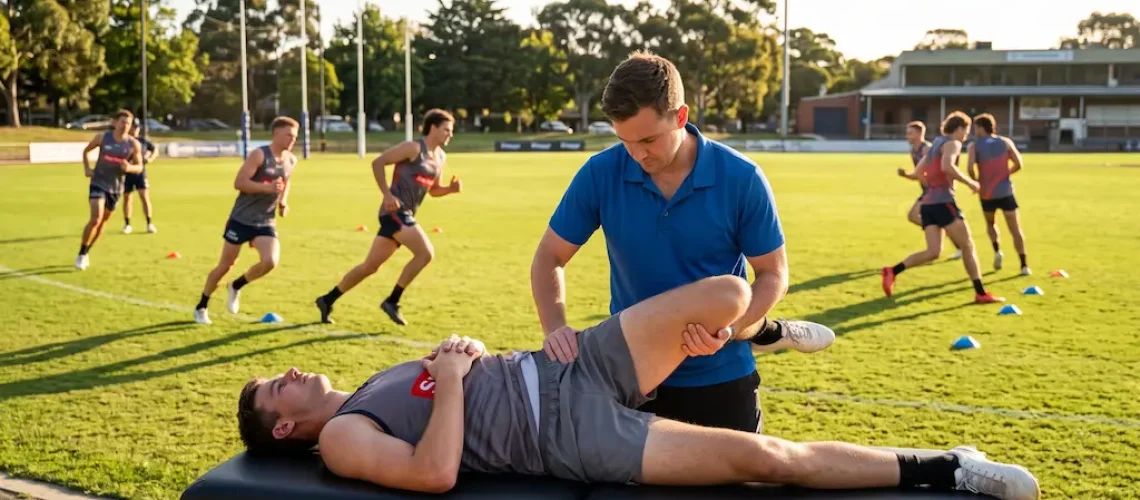
Preseason training in Australian Rules Football (AFL and community levels) sets the foundation for performance, durability, and injury resilience across the competitive season. From an osteopathic perspective, effective preseason preparation goes beyond fitness testing and conditioning—it focuses on movement quality, load tolerance, recovery, and whole-body integration.
Osteopaths working with footballers aim to help athletes enter the season strong, mobile, and adaptable to the demands of the game.
Understanding the Demands of Australian Rules Football
Australian Rules Football places unique physical stresses on the body, including:
- Repeated sprinting and acceleration/deceleration
- High-volume running with frequent direction changes
- Kicking asymmetry and rotational load
- Jumping, marking, and landing forces
- Physical contact and ground-level work
These demands place particular stress on the hips, pelvis, lumbar spine, knees, ankles, and shoulders, especially when preseason loads increase rapidly.
Key Osteopathic Principles for Preseason Training
1. Build Load Gradually
One of the most common causes of preseason injury is a rapid increase in training volume or intensity. Tissues require progressive exposure to load to adapt effectively.
Suggestions:
- Increase running volume and intensity incrementally
- Balance conditioning sessions with recovery days
- Monitor early signs of overload such as persistent tightness, asymmetrical soreness, or reduced range of motion
2. Prioritise Movement Quality
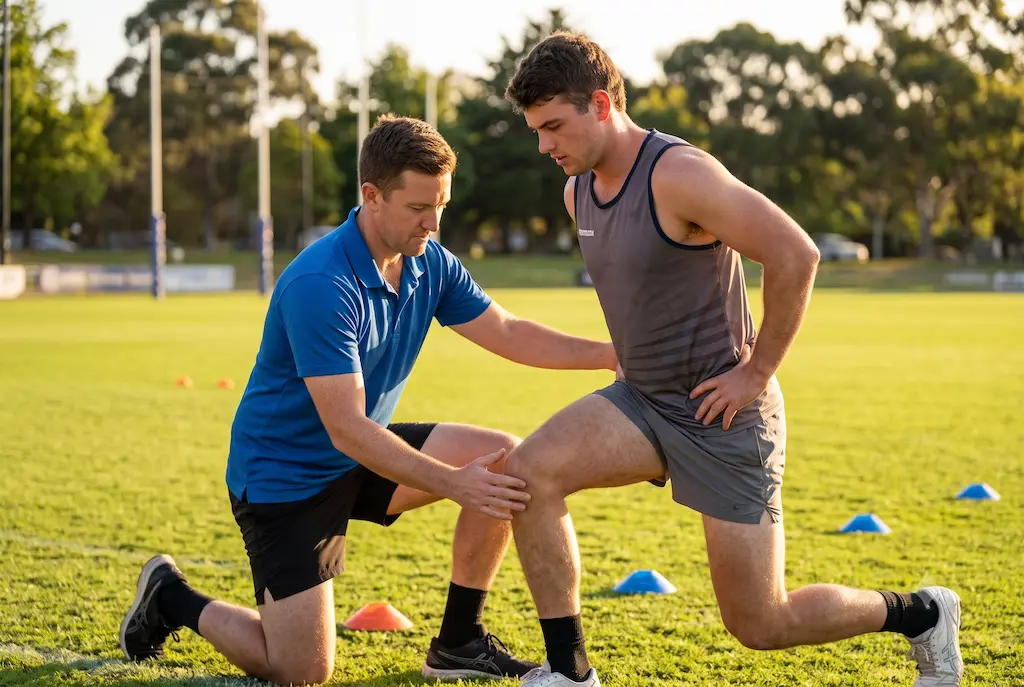
Efficient movement reduces unnecessary strain and improves performance. Before high-speed or contact work intensifies, athletes should demonstrate adequate:
- Hip and ankle mobility
- Thoracic spine rotation
- Pelvic and trunk control
- Single-leg balance and strength
Our Osteopaths at Stay Tuned can help assess these for each of the athletes. They will often assess and address restrictions that may compromise kicking mechanics, sprinting efficiency, or change-of-direction control.
3. Address Asymmetry Early
Football inherently creates asymmetry, particularly through repeated kicking patterns. During preseason, this asymmetry can be amplified.
Osteopathic recommendations include:
- Monitoring side-to-side differences in hip range, strength, and control
- Including unilateral strength and stability exercises
- Ensuring recovery strategies address the dominant kicking side
Early correction helps reduce compensatory strain later in the season.
4. Integrate Strength With Mobility
Strength without mobility can increase injury risk, while mobility without strength may limit performance.
From an osteopathic standpoint:
- Strength work should occur through full, controlled ranges (Pilates is great for this)
- Hip, groin, and calf strength are particularly important
- Trunk and pelvic stability underpin kicking power and running efficiency
Exercises should reflect game-specific movement patterns.
5. Don’t Neglect the Spine
The spine plays a central role in force transfer between the upper and lower body. Restrictions in the thoracic or lumbar regions (mid-lower back) can alter kicking mechanics and running symmetry.
Preseason focus areas:
- Thoracic mobility for rotation and extension
- Lumbar-pelvic coordination
- Cervical mobility for vision and marking contests
Osteopathic manual therapy can assist in maintaining spinal mobility during heavy training blocks.
Recovery as a Training Tool
Recovery is not passive; it is a critical component of adaptation.
Osteopathic strategies may include:
- Manual treatment to support tissue recovery – Massage, addressing joint restrictions etc)
- Active recovery sessions (mobility, swimming, light aerobic work, ice baths etc)
- Sleep and hydration education
- Early management of niggles before they escalate
Athletes who recover well train more consistently and more effectively.
Common Preseason Injury Patterns
Osteopaths frequently see the following during preseason:
- Hip flexor and groin strains
- Calf and Achilles overload
- Lumbar stiffness or referred pain
- Hamstring tightness related to pelvic mechanics
Early assessment can often prevent these issues becoming time-loss injuries.
Integrating Osteopathy Into Preseason Programs
Osteopathy works best when integrated alongside strength and conditioning staff, coaches, and physiotherapists. Regular check-ins during preseason allow:
- Identification of emerging movement restrictions
- Monitoring of load tolerance
- Individualised advice for high-risk players + targeted rehab programs
This collaborative approach supports both performance and injury prevention.
Conclusion
From an osteopathic perspective, effective Australian Rules Football preseason training is about preparing the body as a connected, adaptable system. By prioritising movement quality, gradual loading, asymmetry management, and recovery, players are better equipped to handle the physical demands of the season ahead.
A well-managed preseason doesn’t just reduce injury risk; it enhances performance, consistency, and longevity in the game.