
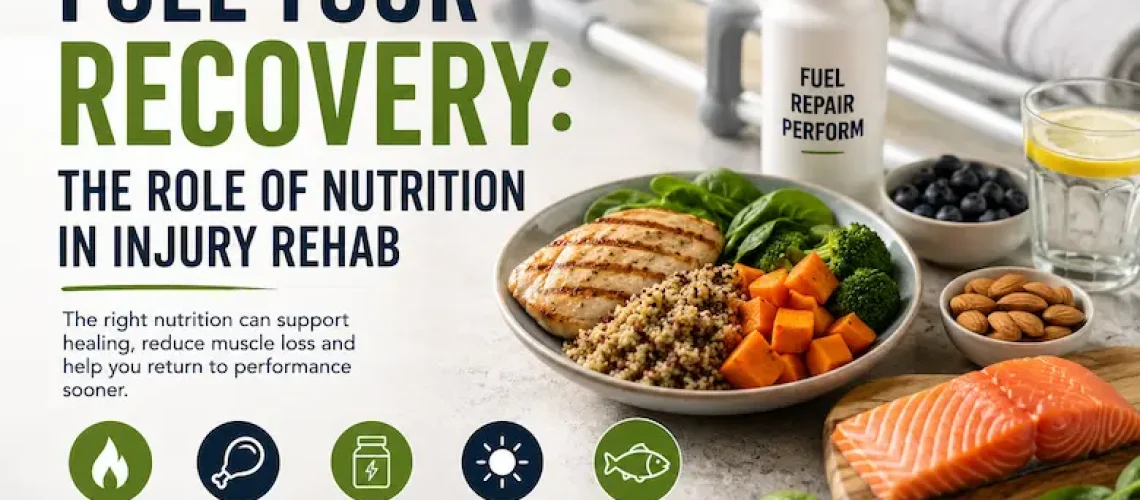
There are several key nutrition factors that can enhance recovery, including overall energy intake, protein, calcium, vitamin D, and supplements like creatine, collagen, and fish oil. Let’s break these down.
Whether your injury is short-term or long-term, what you eat can influence how well, and how quickly you recover. While nutrition isn’t the primary driver of recovery, it can absolutely support better rehab outcomes and help you return to performance sooner.
Calories
If your injury has reduced your training load or stopped you from exercising altogether, it might feel logical to cut back on food intake. However, this can actually work against your recovery.
Being in a low-energy state can slow down the healing process. Even though you may not be fuelling training, your body still needs energy to repair and rebuild during rehab.
In fact, regaining muscle and strength (key goals during recovery) is much easier when you’re eating enough, or even slightly above your usual intake. Adequate calories give your body the resources it needs to rebuild.
Protein
Protein plays a major role in recovery! Firstly, it helps minimise muscle loss, which is common in the early stages of injury. Less muscle loss means a smoother and faster return to performance. Secondly, adequate protein intake supports muscle repair and strength rebuilding during rehab.
How much do you need?
Aim for 1.6–2.2kg per kg of body weight per day. For example, at 80kg, that’s around 128–192g per day.
The range varies depending on the injury. For example, if a limb is immobilised after surgery, muscle loss can occur rapidly, so a higher protein intake becomes even more important.
Creatine
Creatine is well known for supporting muscle strength and growth, which makes it highly relevant during injury rehab. It can also help reduce the decline in muscle mass and strength during periods of inactivity or immobilisation.
Calcium & Vitamin D
These are especially important if your injury involves bone.
Both nutrients contribute to improving bone strength and density. While many people get enough through diet and sun exposure, supplementation may provide additional support, particularly if levels are low.
Taking them together is beneficial, as vitamin D enhances calcium absorption.
Fish Oil
Fish oil provides omega-3 fatty acids, which have anti-inflammatory properties and potential benefits for recovery. While research is still developing, early findings are promising. For example, one study showed that individuals taking fish oil during a period of immobilisation retained more muscle mass than those who didn’t.
Beyond individual nutrients, your overall diet matters.
A varied intake of whole foods (fruits, vegetables, whole grains, legumes, nuts, and seeds) ensures you’re getting key nutrients like antioxidants, magnesium, and zinc, all of which support the healing process.
If you want to understand how to apply this to your specific injury and training goals, book a consultation with a sports dietitian for a personalised plan.