
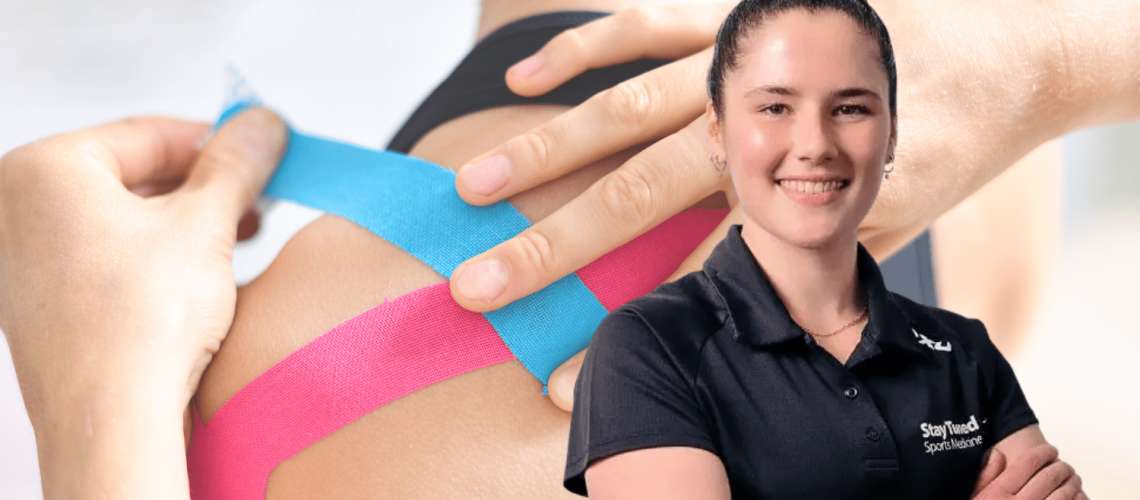
As an osteopath, I’ve seen how Kinesiology Tape (K-Tape), can help people feel their bodies better and recover more effectively. While it might seem like a trendy tool, research is increasingly showing that K-Tape supports both acute injuries and long-term rehab, especially by improving something called proprioception.
What Is Proprioception and Why Does It Matter?
Proprioception is your body’s ability to know where it is and how it’s moving, even with your eyes closed. It helps with balance, coordination, and keeping joints stable. When you’re injured (e.g. ankle sprains, back pain), proprioception often gets worse. That’s why regaining it is so important to recovery, and why K-Tape can help.
1. K-Tape helps you sense joint position better
A large meta-analysis looked at how taping affects body awareness. It found that elastic tapes like K-Tape significantly improve your sense of joint position, even when you’re fatigued or recovering from injury (Ghai, Ghai, & Narciss, 2024). This means your body becomes more aware of where your joints are in space, helping you move better and more safely.
Think of it like your skin sending your brain a little reminder of where your ankle or shoulder is.
2. K-Tape improves force awareness -not just position
Another review found that K-Tape helps you better judge how much force your muscles are producing (Ghai, Ghai, & Narciss, 2023). That’s called force sense, and it matters more than you’d think, especially when lifting, running, or even getting back to regular daily movements. This means K-Tape doesn’t just help you feel where you are, but also how hard you’re working.
3. Useful right after exercise or injury
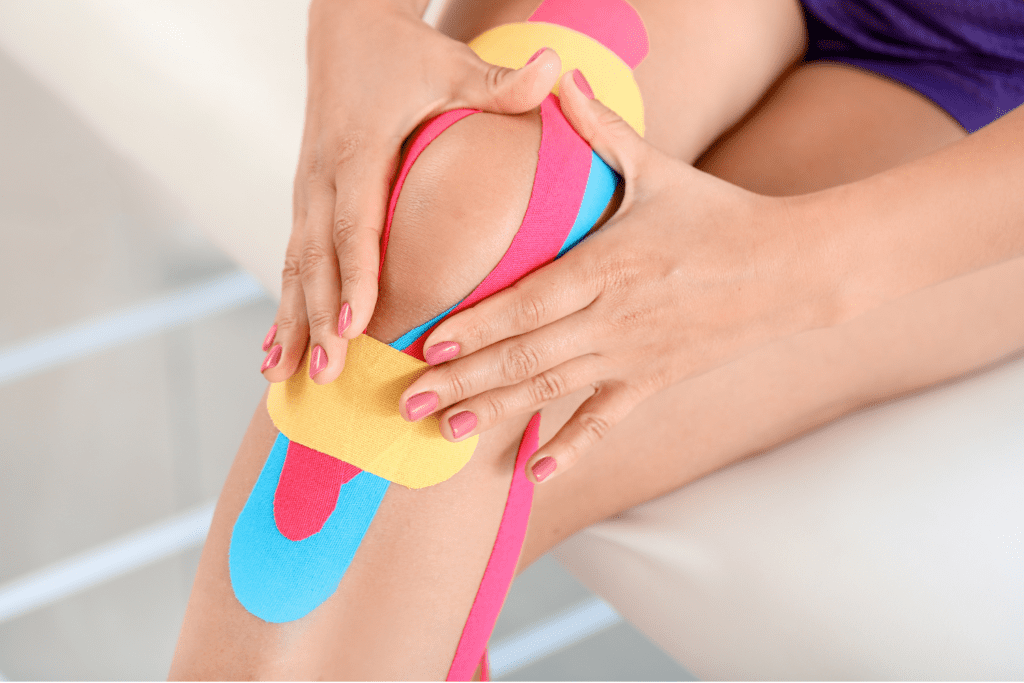
After a workout or injury, your muscles often feel tired and your coordination drops. A randomized trial tested how K-Tape performs right after ankle fatigue, and it worked! It helped improve muscle strength and joint awareness, more so than rigid tapes (Bae, Lee, & Kim, 2024). So, K-Tape could be a great option early in rehab when your nervous system needs a little boost.
4. Helpful for chronic pain too
If you’ve had back pain for a long time, your body awareness is often out of sync. One high-quality study found that applying K-Tape to the lower back improved proprioception, reduced pain, and improved function in people with chronic pain (Paolucci et al., 2020). That means taping doesn’t just help with injuries, it can support long-term recovery and movement retraining.
5. Why Osteopaths use K-Tape in practice
K-Tape fits beautifully into the osteopathic approach:
- It supports muscles without restricting natural movement.
- It boosts awareness, helping your nervous system “talk” to your body better.
- It may improve fluid flow, like circulation and lymphatic drainage.
- It’s non-invasive, drug-free, and affordable.
- Most importantly, it helps patients feel more connected and in control of their recovery.
Final Word
K-Tape isn’t magic, but it can support your recovery, especially by helping your brain and body reconnect. Whether you’re coming back from an injury or dealing with chronic pain, K-Tape offers a safe, low-risk tool to help you move better and feel better.
Dr Emily Sandman
Osteopath & Group Exercise Rehab Instructor
E: Emily.Sandman@staytuned.com.au

References
Bae, Y. H., Lee, S. M., & Kim, K. Y. (2024). Immediate effect of kinesiology taping on muscle strength, static balance and proprioception after eccentric muscle fatigue on the ankle: A randomized cross-over trial. Journal of Back and Musculoskeletal Rehabilitation, 37(1), 33–40. https://doi.org/10.3233/BMR-230038
Ghai, S., Ghai, I., & Narciss, S. (2023). Influence of taping on force sense accuracy: A systematic review with between- and within-group meta-analysis. BMC Sports Science, Medicine and Rehabilitation, 15, Article 29. https://doi.org/10.1186/s13102-023-00740-1
Ghai, S., Ghai, I., & Narciss, S. (2024). Influence of taping on joint proprioception: A systematic review with between- and within-group meta-analysis. BMC Musculoskeletal Disorders, 25, Article 213. https://doi.org/10.1186/s12891-024-07571-2
Paolucci, T., Morone, G., Fusco, A., Primavera, M., Iosa, M., Saggini, R., & Dimaggio, M. (2020). Short-term effect of kinesiology taping on pain, functional disability and lumbar proprioception in individuals with nonspecific chronic low back pain: A double-blinded, randomized trial. Chiropractic & Manual Therapies, 28, Article 47. https://doi.org/10.1186/s12998-020-00349-y